The Complete Guide to Production Planning

What should we make and when, and why production planning and production scheduling are different jobs, even when one person does both.
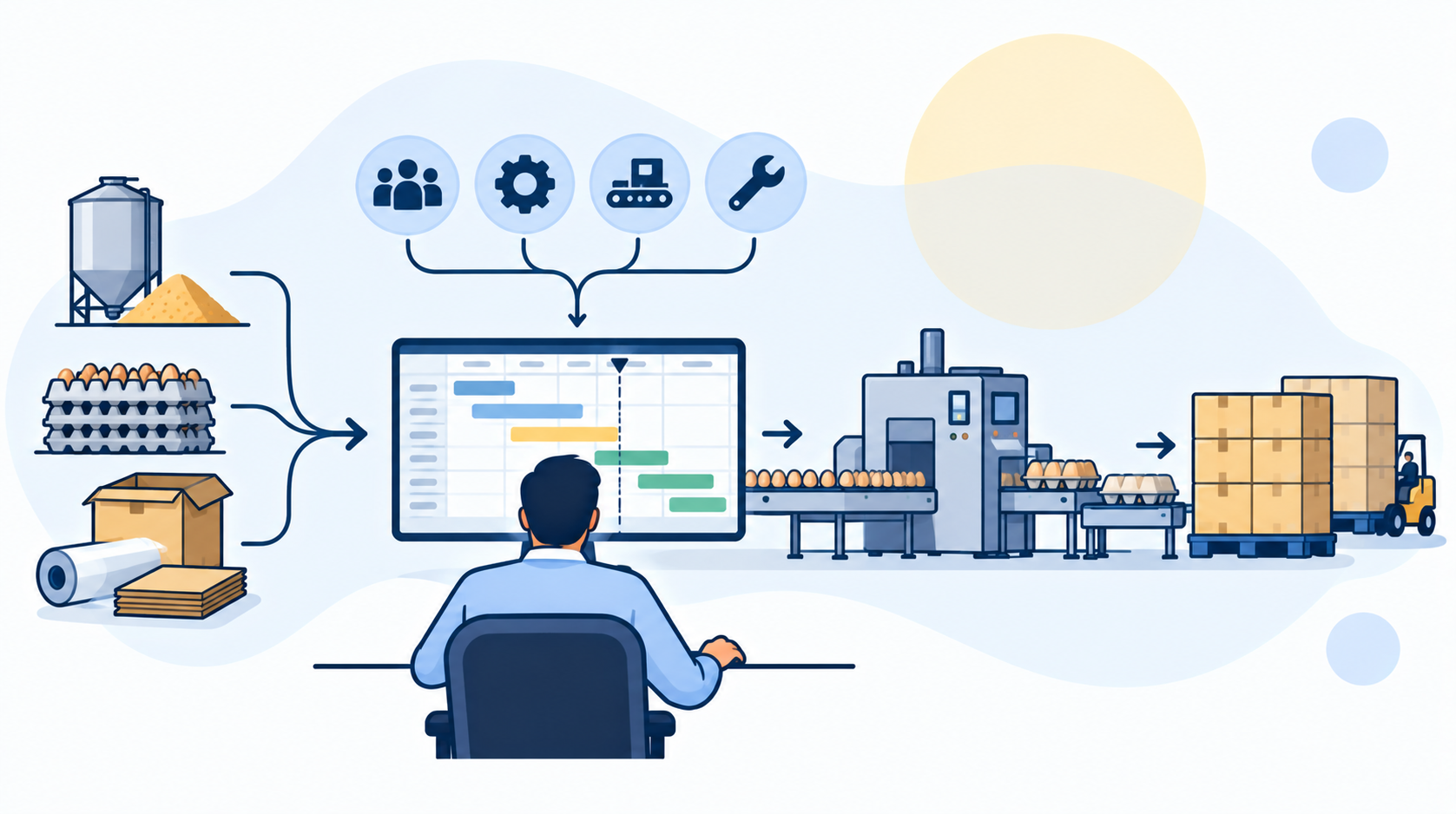
Production planning answers the question: what should we make, how much, and when? It turns the demand plan and inventory targets into a plan the factory can actually run, within the capacity, materials and people it has.
It is easy to confuse with production scheduling, and in a small site one person often does both. But they are different jobs at different distances, and mixing them up is one of the most common sources of friction between planning and the factory floor. This guide covers both, and where the line sits between them.
Production planning vs production scheduling
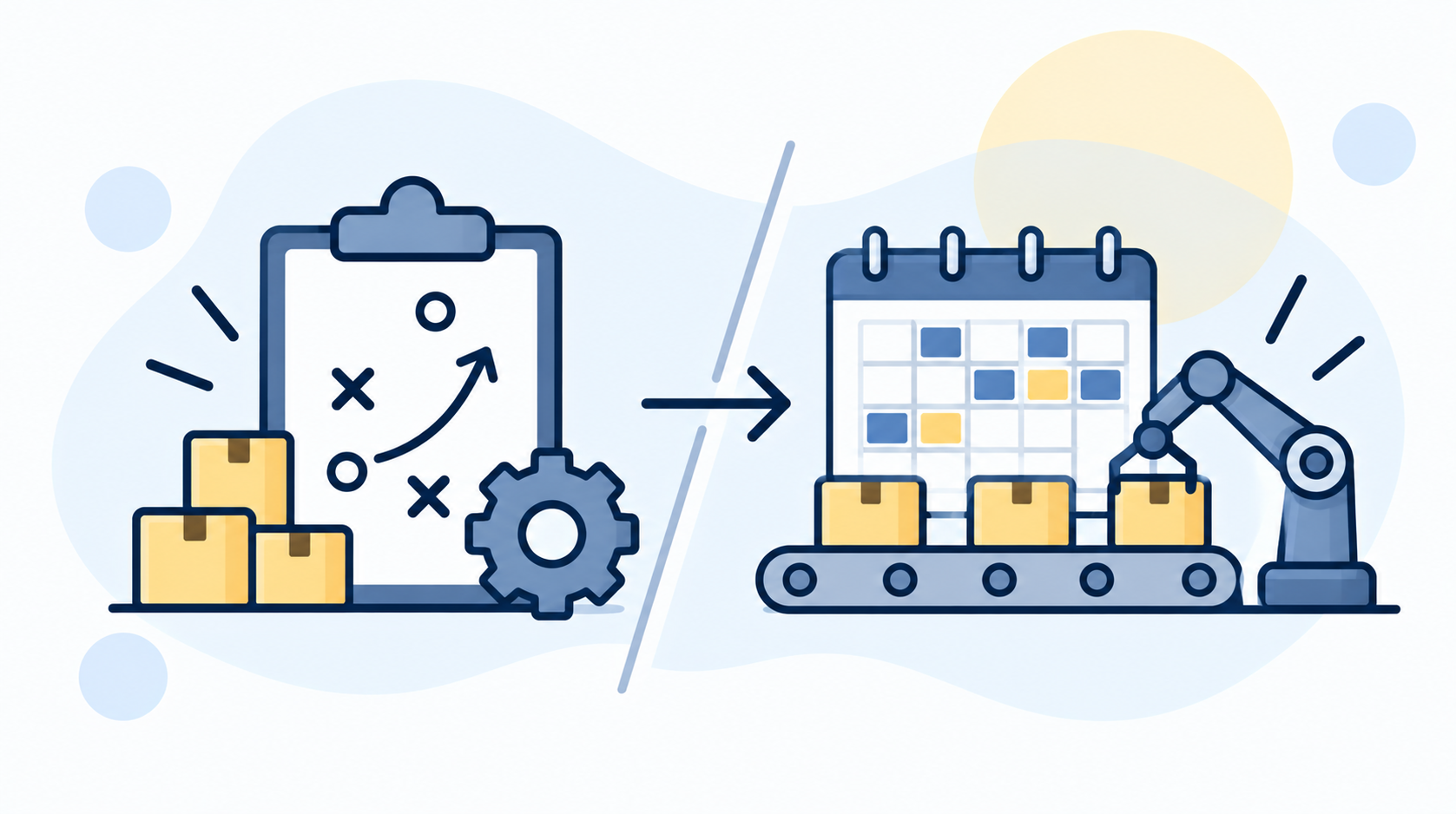
Production planning decides quantities over weeks and months: how many cases of each product to make, roughly when, and whether the plan fits the capacity available. It looks ahead far enough to order materials, arrange labour and build stock before a peak.
Production scheduling decides the exact sequence over hours and days: which product runs on which line, in what order, starting at what time. It deals with changeovers, cleaning, crewing and the reality of what happened on the last shift.
A simple test: if the decision is about how much, it is planning. If it is about what order, it is scheduling. For the full comparison, read production planning vs production scheduling.
The three levels of production planning
1. Aggregate or capacity planning (6 to 24 months). Planning at the level of product families and total hours. Do we have enough line time, shifts and storage for the year? Do we need to pre-build for a seasonal peak, add a shift, or use a co-packer? This usually runs through the S&OP process.
2. Master production schedule (roughly 4 to 13 weeks). Planning individual products by week. The MPS states what will be made, and it drives material ordering. It should be stable inside the material lead time, because changing it there means expediting or running out of components.
3. Detailed schedule (this week and next). The sequence on each line, shift by shift. This is where the plan meets reality.
Each level should feed the next. When the master schedule ignores capacity, or the schedule ignores the master plan, the factory ends up planning for itself and the numbers stop meaning anything.
Key concepts every production planner needs
- Capacity. Available hours multiplied by realistic run rates, minus changeovers, cleaning and planned maintenance. Use demonstrated rates, not nameplate speeds.
- Rough-cut capacity check. A quick test of whether the plan fits the critical lines before you commit to it. It doesn't need to be precise, it needs to be done every cycle.
- Batch sizes and minimum runs. Longer runs mean fewer changeovers but more stock. The right batch size balances the two, and it is rarely the longest run the line can do.
- Changeovers and sequencing. In food, sequence often matters for allergens, flavours and colours: light to dark, allergen-free before allergen. Product wheels and campaign planning keep this predictable.
- Make to stock vs make to order. Most FMCG is made to stock against a forecast. Some lines, such as private label or export orders, are made to order. They need different rules.
- Material requirements. Every planned run needs ingredients and packaging to arrive in time. The bill of materials and supplier lead times turn the production plan into purchase orders.
- Frozen and slushy zones. A period close in where the plan is locked, and a period beyond it where changes are allowed but need a reason. This protects the factory from constant re-planning.
Production planning in food and FMCG
Food and beverage production adds constraints that generic production planning advice often ignores:
- Shelf life limits how far ahead you can build. You can't pre-build three months of a product with a six-week life.
- Seasonality means demand peaks often exceed capacity, so the plan has to build stock in quieter months, within shelf life and storage limits.
- Allergen and hygiene rules dictate sequence and add cleaning time between runs.
- Raw material variability, for milk, produce or grain, can change yields and run rates from week to week.
- Retailer promotions create sharp spikes that need capacity and materials reserved weeks in advance.
How to build a production plan
- Start from the supply plan. Take the planned production quantities for each product by week, based on demand and inventory targets. See how to build a 13-week supply plan.
- Convert to hours. Divide each quantity by the demonstrated run rate for its line, then add changeover time.
- Compare with available capacity. Line by line, week by week. Flag every week that is over or badly under.
- Resolve the gaps. Move runs earlier, combine batches, add shifts, or go back to supply and sales with the trade-off. Never quietly assume the factory will cope.
- Check materials. Make sure every run has ingredients and packaging arriving in time.
- Lock the near weeks and hand over. Agree the frozen period and pass the plan to scheduling.
Common production planning problems
- Planning to nameplate capacity. If the plan assumes the line runs at its rated speed all shift, it will fail every week.
- Constant changes inside the frozen period. Every late change costs efficiency and often materials. Track how often it happens and why.
- Batch sizes nobody has reviewed. Run lengths set years ago for a different product range quietly build excess stock.
- Planning and the site working from different numbers. If the factory keeps its own spreadsheet, the official plan has already lost.
Articles in this guide
Go deeper on each part of the process.
Practise it on your own numbers
Free calculators and templates that go with this guide.
The Planning Toolkit Bundle
Demand Planning Pro and the Inventory Targets Toolkit together. Forecast what you'll sell, then set the stock to hold. A$119 one-off.
Frequently asked questions
What is production planning?
Deciding what to make, how much and when, so production meets the demand plan and inventory targets within the capacity and materials available.
What is a master production schedule?
A week-by-week plan of the quantity of each product to be made over the next few months. It drives material ordering and connects the supply plan to the detailed schedule.
What does a production planner do?
Turns the supply plan into a feasible production plan: checks capacity, sets batch sizes, makes sure materials will arrive, and hands a stable plan to scheduling.
What is the difference between production planning and MRP?
Production planning decides what finished products to make. MRP (material requirements planning) works out the ingredients and packaging those runs need, and when to order them.
Want a second set of eyes on how planning and the factory floor work together? A Planning Health Check from Forward Cover looks at your forecast, stock and service data and gives you a short list of what to fix first. Get in touch and we can talk through what you are seeing.